
Cardiac assessment in Geneva
Review your cardiovascular health, assess your risk factors and arrange tests suited to your situation.
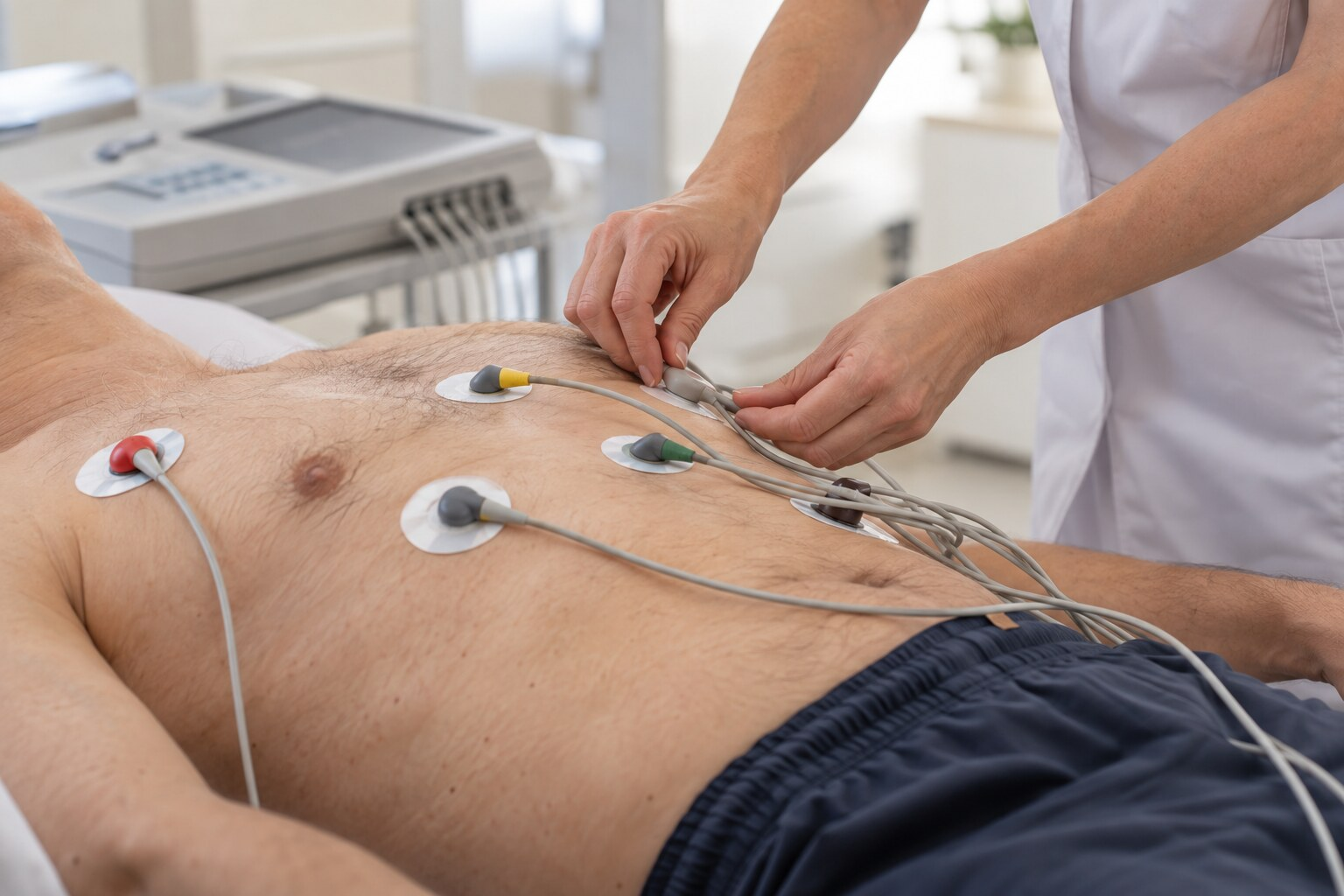
Assessing your heart health
A cardiac assessment starts with a discussion of your symptoms, medical history, treatments and lifestyle. The cardiologist performs a clinical examination and determines which investigations are appropriate for your situation.
When should I have a cardiac assessment?
An assessment may be suggested to investigate breathlessness, palpitations or swelling in the feet and legs. It also provides an opportunity to review risk factors such as family history, smoking, high blood pressure, diabetes or high cholesterol.
Age is part of this assessment, but does not by itself determine a testing schedule. The cardiologist tailors the assessment and frequency of follow-up to your symptoms, medical history and state of health.
Tests available at the centre
An electrocardiogram (ECG) records the heart’s electrical activity. Echocardiography allows its structures and function to be examined. A cycle ergometer stress test assesses how the heart responds to gradually increasing physical activity.
Prolonged heart rhythm monitoring may complete the assessment, particularly when symptoms are intermittent. These tests are prescribed when medically indicated and are not all routinely required.
An outpatient assessment
We perform the assessment on an outpatient basis, without an overnight hospital stay. An ECG is quick, non-invasive and painless. Echocardiography provides information about heart function and can help assess the effects of a heart attack. Blood tests may complement the cardiac investigations depending on your situation.
The assessment may form part of the investigation or follow-up of high blood pressure, coronary heart disease, heart failure or a rhythm disorder.
Preparing for your consultation
Bring previous test results, your medication list and any documents from your doctor. Ask reception whether the planned tests require any specific preparation.
Results and follow-up
The assessment results help guide discussions about prevention, treatment or further investigations. Follow-up depends on your medical situation.
Frequently asked questions
Information to help you prepare for your consultation. Discuss your individual situation with the doctor.
Which tests may be included in a cardiac assessment?
Depending on your situation, the cardiologist may suggest an ECG, echocardiography, an exercise stress test or prolonged heart rhythm monitoring. These tests are not all performed routinely.
Do I need to fast before a cardiac assessment?
This depends on the tests planned. Ask reception for instructions when booking. Do not change your medication without medical advice.
What should I bring to my first assessment?
Bring previous ECGs, cardiology reports, blood test results and your medication list. A referral letter from your doctor and any blood pressure readings may also be helpful.
What is the difference between an ECG and an echocardiogram?
An electrocardiogram records the heart’s electrical activity and provides information about its rhythm, among other things. Echocardiography uses ultrasound to examine heart structures and function. The two tests provide complementary information.
Does a cardiac assessment require a hospital stay?
We perform cardiac assessments on an outpatient basis, without an overnight hospital stay. Contact reception for information about how your prescribed tests are organised.
Other specialties
Ischaemic heart disease
The centre diagnoses and follows up conditions linked to an insufficient blood supply to the heart muscle.
Explore this specialtyHigh blood pressure
Diagnosis, blood pressure measurement and follow-up tailored to your cardiovascular profile.
Explore this specialtyHeart rhythm disorders
Investigating heart rhythm disorders and intermittent symptoms with appropriate monitoring.
Explore this specialtySports cardiology
Assessing your heart health when you exercise, return to sport or plan a new physical activity.
Explore this specialtyBook an appointment
To book an appointment or ask a practical question, call reception.
Champel Cardiology Centre
8 am–5 pm