
Ischaemic heart disease in Geneva
The centre diagnoses and follows up conditions linked to an insufficient blood supply to the heart muscle.
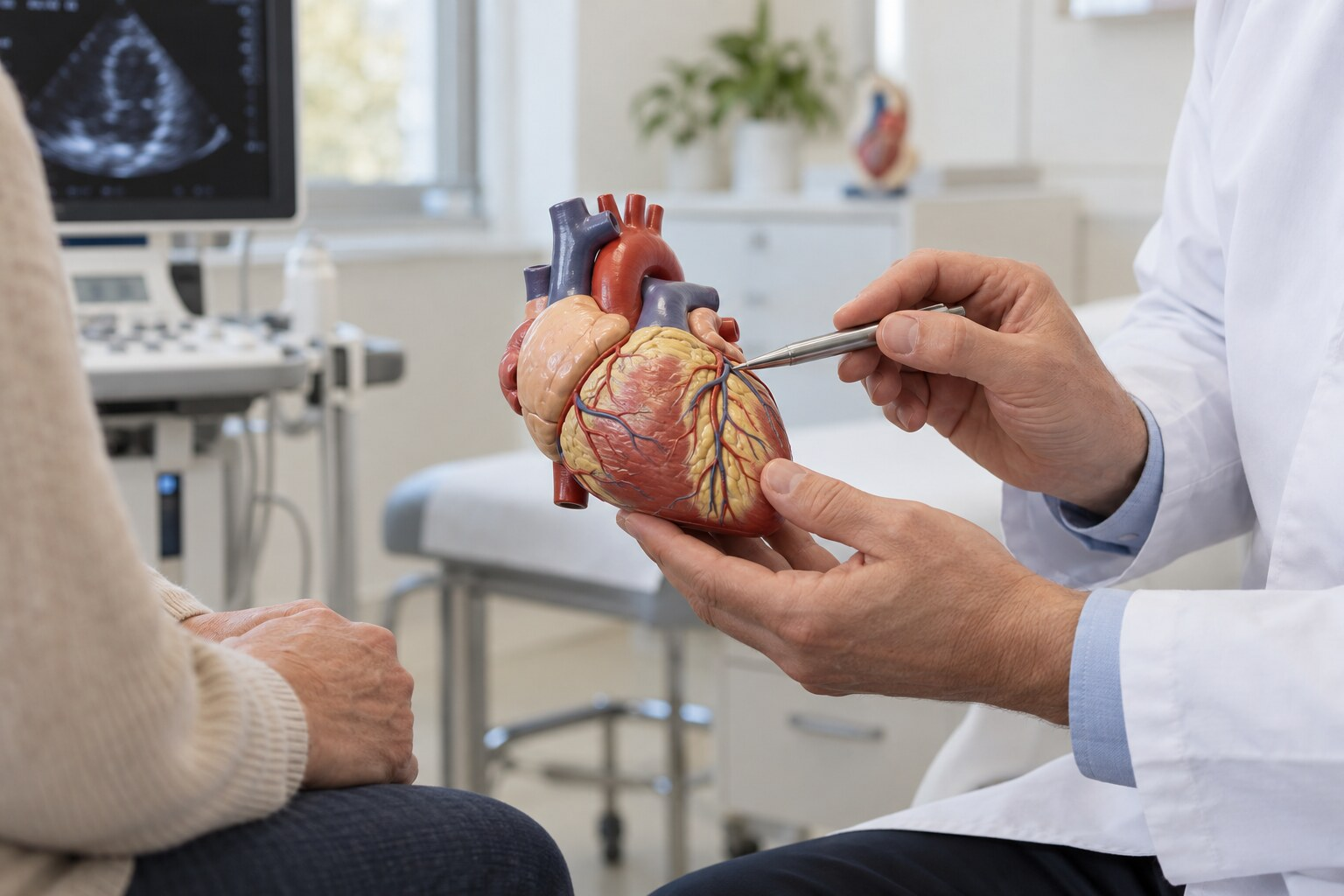
Understanding ischaemic heart disease
Ischaemic heart disease occurs when the heart muscle receives insufficient blood and oxygen. It may be related to disease of the coronary arteries. The consultation aims to clarify your situation and arrange appropriate care.
Which symptoms may prompt a consultation?
Chest pain or breathlessness may prompt investigation of a possible coronary cause. These symptoms alone cannot establish a diagnosis. A major, prolonged reduction in blood supply can damage the heart muscle and cause a heart attack.
For new, severe or persistent chest pain, particularly at rest or with a feeling of being unwell, call 144 in Switzerland. Do not wait for an appointment at the practice.
Diagnosis at the centre
The cardiologist considers your symptoms, medical history and cardiovascular risk factors. The clinical examination may be complemented by an ECG, echocardiography, an exercise stress test or other investigations when indicated.
Prevention and treatment
Follow-up combines management of risk factors with medication when indicated, or referral for further tests and treatment. Smoking, diabetes, cholesterol and blood pressure are among the issues discussed with your doctor.
Addressing risk factors
Prevention includes stopping smoking, appropriate physical activity, diet and controlling diabetes, cholesterol and blood pressure. Goals are agreed with your doctor according to your cardiovascular risk.
Medication is chosen according to the condition and your situation. Follow-up allows symptoms to be reassessed and care to be adjusted over time.
Arranging your follow-up
Bring previous reports, test results and details of your current treatment. These documents help us review your medical history.
Frequently asked questions
Information to help you prepare for your consultation. Discuss your individual situation with the doctor.
What is the difference between ischaemic heart disease and a heart attack?
Ischaemic heart disease means an insufficient oxygen supply to the heart muscle. A heart attack is an acute complication in which part of the muscle is damaged by a prolonged interruption of that supply.
What is assessed during the consultation?
The cardiologist reviews your symptoms, medical history and treatment. They examine risk factors including smoking, high blood pressure, diabetes and cholesterol, then determine which tests are needed.
Do I still need follow-up while on treatment?
Follow-up assesses symptoms, medication tolerance and control of risk factors. The cardiologist agrees the frequency of visits and which tests need to be repeated.
What is the role of a stress test in assessing ischaemic heart disease?
A stress test monitors your ECG, heart rate and blood pressure during gradually increasing exercise. It can help identify signs that the heart muscle is receiving insufficient oxygen during exertion. The cardiologist decides whether this test is appropriate and whether further investigations are needed.
Which results should I bring to a coronary heart disease follow-up?
Bring consultation, hospital or coronary angiography reports, along with recent blood test results and your current prescription. These documents allow the cardiologist to review your history and plan further follow-up.
Other specialties
Cardiac assessment
Review your cardiovascular health, assess your risk factors and arrange tests suited to your situation.
Explore this specialtyHigh blood pressure
Diagnosis, blood pressure measurement and follow-up tailored to your cardiovascular profile.
Explore this specialtyHeart rhythm disorders
Investigating heart rhythm disorders and intermittent symptoms with appropriate monitoring.
Explore this specialtySports cardiology
Assessing your heart health when you exercise, return to sport or plan a new physical activity.
Explore this specialtyBook an appointment
To book an appointment or ask a practical question, call reception.
Champel Cardiology Centre
8 am–5 pm