
Heart rhythm disorders in Geneva
Investigating heart rhythm disorders and intermittent symptoms with appropriate monitoring.
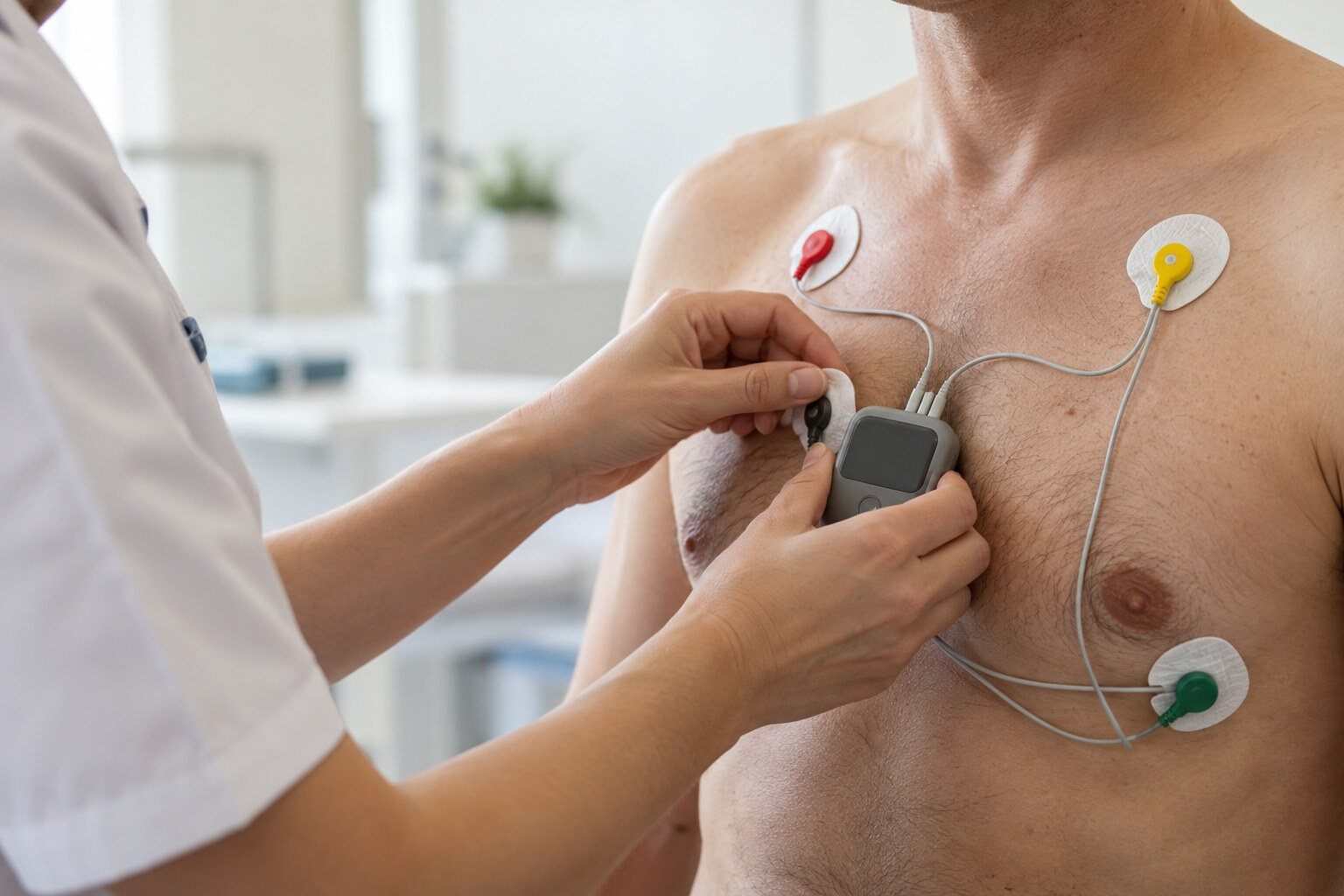
Heart rhythm disorders
An arrhythmia is an abnormality in the rate or regularity of your heartbeat. The consultation helps characterise your symptoms and investigate their cause.
Investigating the cause of a rhythm disorder
A rhythm disorder may be associated with various heart conditions, including ischaemic heart disease or heart failure. Its cause cannot always be identified during a single test. The cardiologist considers your symptoms, how often they occur and your medical history when choosing investigations.
Electrocardiograms and prolonged monitoring
An ECG may be performed during your consultation. When episodes occur occasionally, the cardiologist may suggest prolonged heart rhythm monitoring. The centre offers prolonged recordings, including R-Test monitoring. The observation period ranges from 24 hours to 7 days, depending on the indication and the device.
How does an R-Test work?
The R-Test uses a small device worn on the chest to record your heart rhythm over a defined period. It may have a button to mark a symptom as it happens. The cardiologist then compares that marker with the recorded data.
The device’s discreet size makes it easier to wear during everyday activities. The team will explain how to use it, which activities are permitted and what precautions to take around water. These instructions depend on the model. Please check before assuming you can wear your device in the shower.
After the recording
The cardiologist analyses the data alongside your symptoms. The results guide decisions about further tests, treatment or monitoring.
Frequently asked questions
Information to help you prepare for your consultation. Discuss your individual situation with the doctor.
Can an ECG detect intermittent palpitations?
An ECG records your heart rhythm for a short period. If an episode does not occur during the test, prolonged monitoring may be suggested to improve the chances of capturing it.
How long does heart rhythm monitoring last?
The duration depends on the device and the medical indication. We offer recordings lasting from 24 hours to 7 days, including R-Test monitoring for occasional episodes, depending on the equipment and indication. Confirm the planned duration of your test during your consultation.
What should I do if I have symptoms during monitoring?
Follow the team’s instructions for marking episodes. Note the time, what you felt and what you were doing. This helps the cardiologist compare your symptoms with the recorded rhythm.
What is the difference between a Holter ECG and a cardiac R-Test?
Both devices record the heart’s electrical activity over an extended period to look for rhythm disorders. Their recording duration and operation vary with the equipment. The cardiologist chooses the device according to how often episodes occur and the information needed.
How are heart rhythm recordings analysed?
The analysis compares the recorded data with the symptoms and activities you reported. Depending on the findings, the results help guide decisions about monitoring, further investigations or treatment.
Other specialties
Cardiac assessment
Review your cardiovascular health, assess your risk factors and arrange tests suited to your situation.
Explore this specialtyIschaemic heart disease
The centre diagnoses and follows up conditions linked to an insufficient blood supply to the heart muscle.
Explore this specialtyHigh blood pressure
Diagnosis, blood pressure measurement and follow-up tailored to your cardiovascular profile.
Explore this specialtySports cardiology
Assessing your heart health when you exercise, return to sport or plan a new physical activity.
Explore this specialtyBook an appointment
To book an appointment or ask a practical question, call reception.
Champel Cardiology Centre
8 am–5 pm